Pro · shipping as shell in 2.0.0-alpha
`verglos hunt` verifies whether a finding can be proved locally.
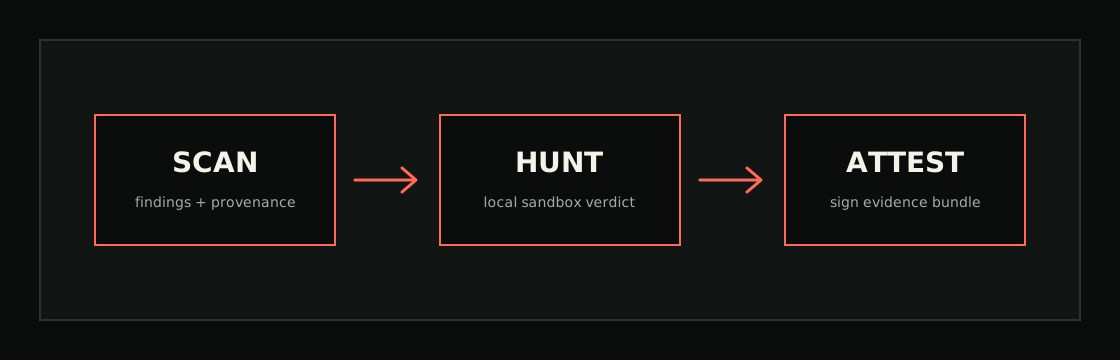
Hunt is the second step in the Verglos CLI trio: scan, hunt, attest. The scanner finds risk deterministically. Hunt is designed to synthesize a proof-of-exploit per selected finding, run that proof in a local sandbox, and attach a verdict to the report.
true
The proof fired in the local sandbox and produced evidence that matches the finding.
false
The local attempt could not reproduce the issue and the finding should not block as verified exploitable.
not_attemptable
The finding needs external infrastructure, credentials, or runtime context that the local sandbox should not fake.
null
The alpha shell has not run functional verification yet, or the beta verifier did not produce a verdict.
Why local sandbox proof
Cloud LLM triage can explain why a finding might matter, but it still asks the buyer to trust inferred severity. Verglos takes the local lane: source stays on the developer machine, proof attempts run beside the repo, and results are stored as evidence fields in `verglos-report.json`.
Current status
In 2.0.0-alpha, `verglos hunt` ships as a gated command shell with typed output and honest status. Functional exploit synthesis and sandbox execution are planned for 2.0.0-beta. Free scans do not run hunt.
Implementation surface
The public package documents the command contract while beta work continues behind the private package boundary. Technical reviewers can inspect the CLI repository and package structure on GitHub.
Open packages/hunt README